

Welcome to the October Development Diary!
To get into the spooooky spirit of Halloween, this month's blog post will be sure to TERRIFY those with a short attention span! With less than 2 months until the release of Update 18, this one has a lot to sink your teeth into.

Over the last month, the team’s continued to work hard on the core management features being introduced in Update 18.
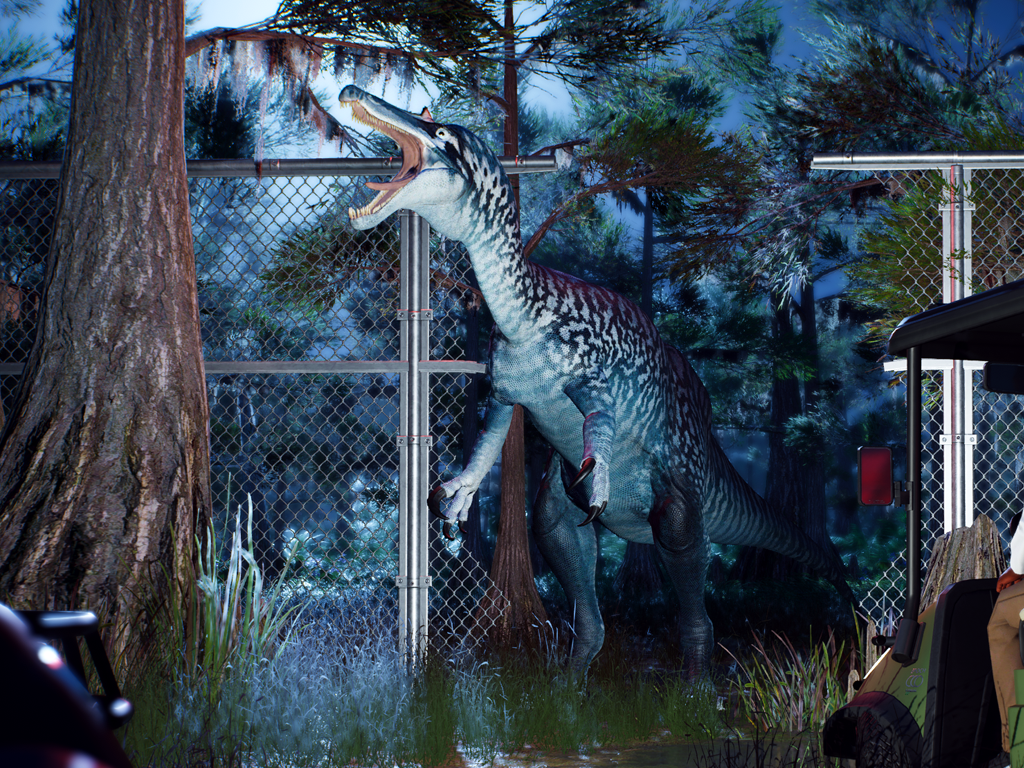
A major focus area has been on the long awaited security gameplay. This is a huge task as it covers not just the security members themselves but all of the related mechanics like animal escapes, breakout conditions, animal-human conflict, engineers, repairs - you’d be surprised by how many systems it ends up overlapping with!
There’s a lot of art and animation we want to complete before doing a deep dive next month, so for now we’ll show you a short work-in-progress clip featuring the Large Security Watchtower. These are just one of the ways your security team will be able to monitor the park, issue escape alerts and act as an early defense for animals that are a risk to human life.
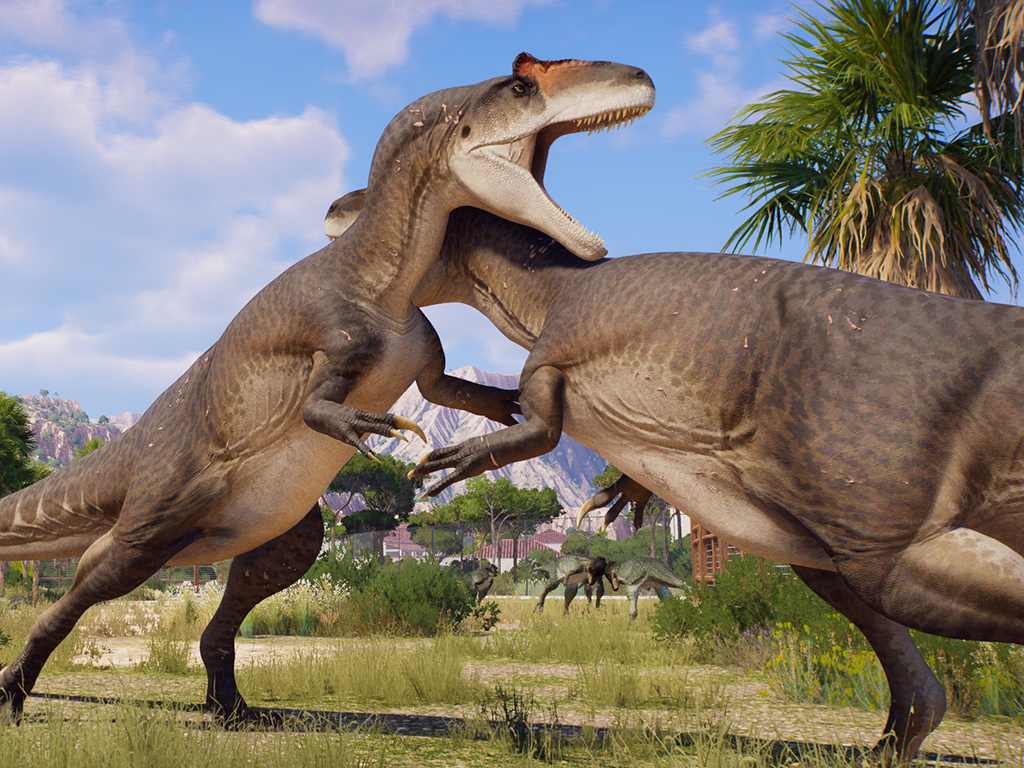
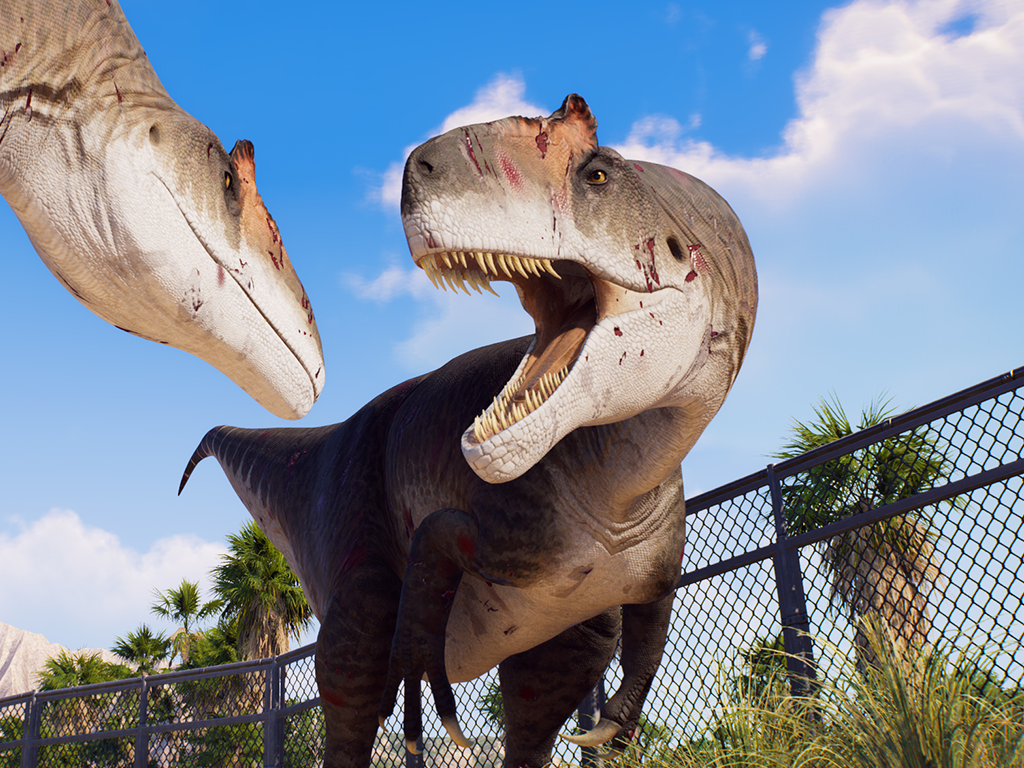
Speaking of animals, we’ve been trying to reign in cases of excessive aggression reported by players. The ‘Family Defense’ behavior will no longer draw in huge fights from a simple scuffle and territorial disputes end when the targeted animal flees. A number of other adjustments have been made but with how dynamic the simulation is we’ll continue to look at player feedback and reports once U18 releases in December.
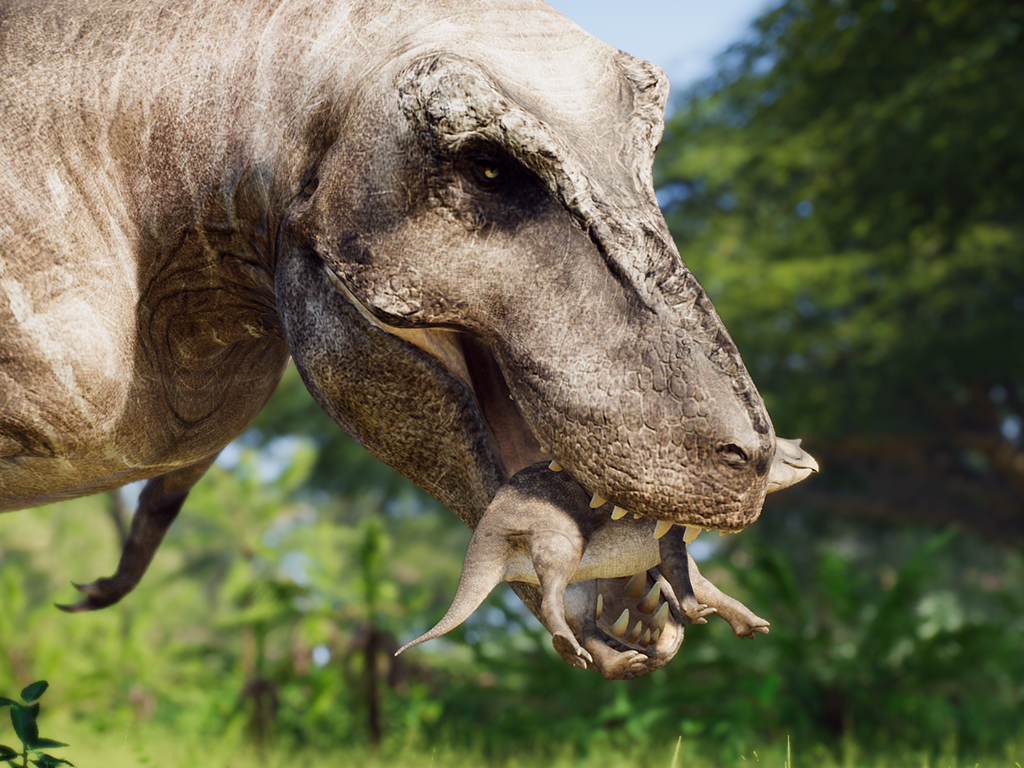
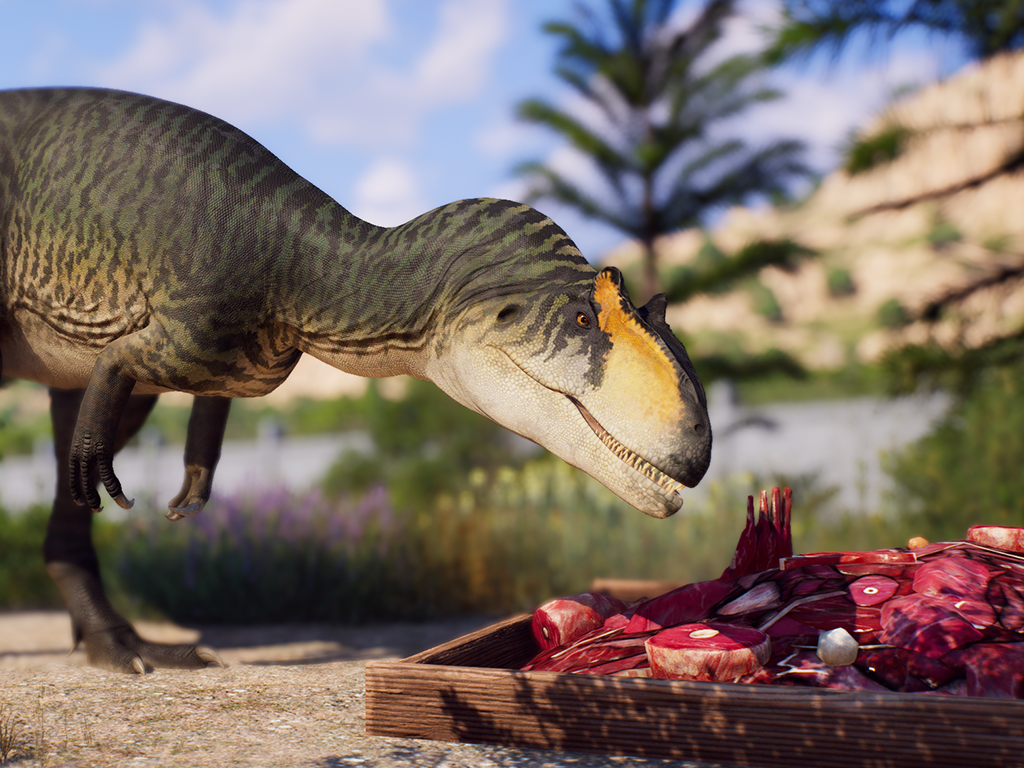
On the topic of aggression, we’re working on a certain combat capability for large carnivores. Soon, they’ll be able to dynamically grab small animals and swallow them whole just like the demo back in 2017. It’s a suspiciously inconvenient time to be a human.
Regarding optimization, we’ve continued to make good headway! We managed to resolve some fairly substantial memory usage from visitors along with other areas like reducing the size of save games on disk. There were also a lot of visually impressive features introduced this month and we want you to be rest assusured that the game won’t run worse because of them. We’ve designed them to be scalable, so they shouldn’t detract from your experience. Just keep that in mind while reading this diary!
Update 18
New Map
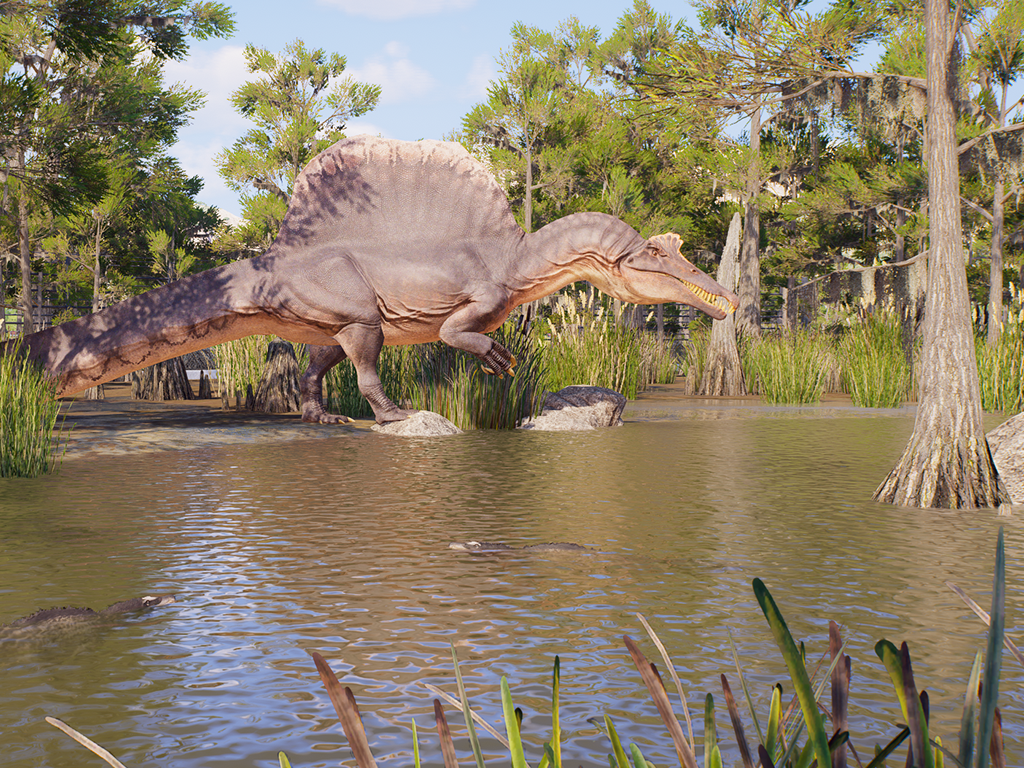
Soon, players will be able to get amongst the reeds and marshlands of Brazil’s famous Pantanal. As the final map coming during Early Access, this landscape provides plenty of flat terrain mixed with winding rivers, forests and swamps. We put a lot of attention into the nature of this map!
One of the most important things we felt was the need to capture the Pantanal’s iconic mountains. Rather than being sidelined as background props, we wanted to put some directly inside the playable space, creating landmarks that can frame your park or inform its design in beautiful ways.
While it’ll certainly be a challenge in Challenge Mode, we’re very curious to see what players do with the level!
Baryonyx
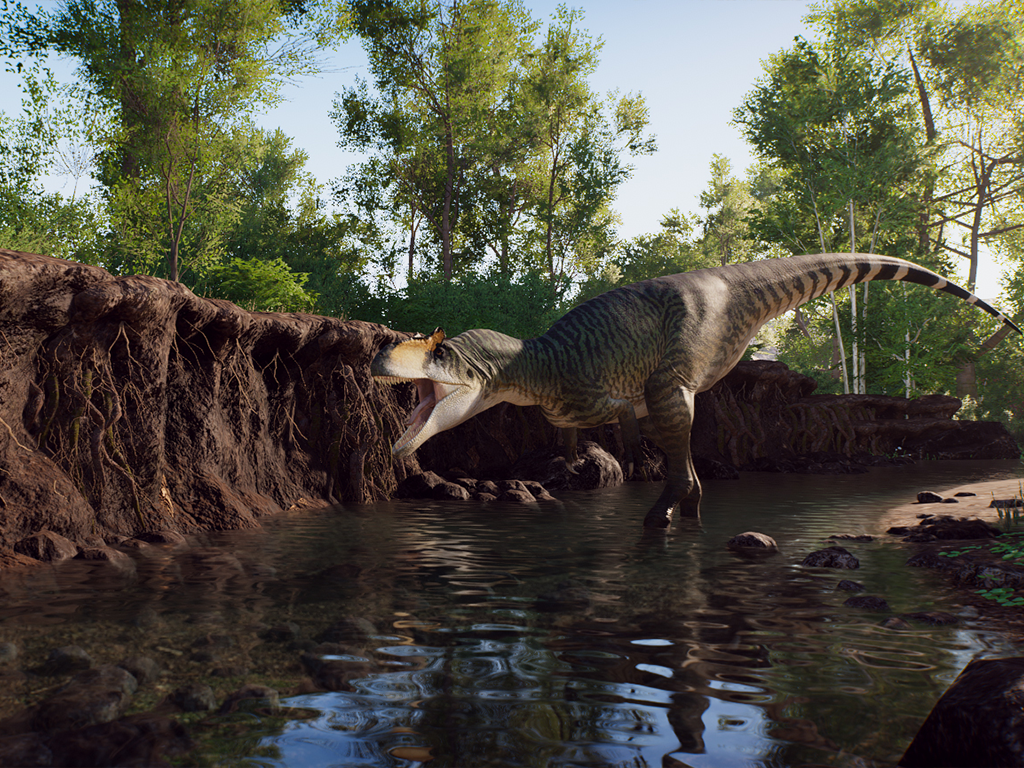
As promised, here’s this month’s look at a new Baryonyx skin! For October, we’re sharing the reptilian variant, equipping our gangly fish eater with large scales and a row of dorsal spikes.
For the babies, our green Baryonyx begins its life with intense patterning and prominent snout stripes. The other two skins are absolute fluffballs, much like aquatic birds! If you look closely, you can actually tell the two feathered babies apart. The left one with bright, goofy eyes and light flecks on its body will grow up to remain fully feathered. The middle one has dark, reflective eyes and white patches on its neck and tail. This will eventually grow into our blue, scaly Baryonyx from last month.
Temperature & Shelter
One of the most popular features from our community survey is officially coming to the game: temperature! With this new mechanic, you’ll need to provide appropriate levels of shelter and climate control to keep your animals healthy.
Throughout the year, your park will experience fluctuations in map-wide ambient temperature, changing with the time of day, weather and seasonal shifts. In the bottom right of the UI, you’ll be able to see the current temperature and preview the forecast. We’ve put together a quick timelapse showing how the Boreal map’s climate can change over 12 months!
When it comes to the animals, each species has an optimal temperature range that contributes to their overall welfare and immunity. The more their surrounding temperature deviates from this range, the worse their immunity becomes before they outright start dying from the heat or cold.
The size of an animal and their skin’s coat determines how quickly they adjust to new temperatures. A small, scaly dinosaur is going to lose heat much quicker than a large, furred mammal.
To help animals deal with these changes, there are a number of methods you’ll want to consider!
Shelter
Shelter is defined by any hard surface that blocks the sky, allowing you to build functional spaces for animals to retreat to during weather events. Certain species can even feel unsafe during thunderstorms and will want shelter to hide in. If they’re unsafe for too long, they might freak out and try to escape.
Forest, water and shelter all act as moderators, slightly skewing the temperature beneath them towards a neutral value when it gets hot or cold. Animals will naturally try to seek shelter when they’re unsatisfied with their temperature.
Basic Temperature Management
In addition to shelter, players will have access to two climate control options at the start of the game: the heat lamp and the cold mister. These basic modules are maintained by engineers and provide a spot for small or mid-sized animals to gradually cool off or heat up when their temperature becomes undesirable.
They can only support one animal standing or sitting under them at a time, so they’re not very efficient for habitats with high populations.
The actual temperature output of these items cannot be directly edited by the player, as they are always relative to the location they’re placed at. This means that in a hot environment, placing a mister under shelter will make it a few degrees colder than if it were placed outside. Once night falls, there’s very little difference due to the drop in ambient temperature.
Using the basic modules like this gives you a quick way to provide animals with some heat regulation, but they’re very dependent on external factors. In the final version, their output won’t be particularly strong, either, so they alone won’t save a mammoth from a desert’s heatwave.
Distributing Heat
With research, players can acquire dedicated heaters, coolers and heat pumps. Together with air vents, these modules allow you to set a target temperature in one location and distribute it to nearby shelters. Here’s a video demonstrating the process of cooling a shelter in a park. The assets themselves are just programmer art for the moment, so you’ll need to use your imagination.
Coolers can only output degrees that are lower than the ambient temperature, so if the weather gets colder than your cooler, it’ll automatically shut off. The same thing applies to heaters but only when it gets too hot.
Heat pumps are a researchable middleground that can do both. Their temperature output is definitely more limited when compared to a dedicated heater or cooler, but their advantage is that they can provide a constant output for animals with moderate temperature needs.
A good example of this would be playing on a map that experiences both cold fronts and heatwaves. Rather than having to build a heater and cooler in the exhibit, heat pumps are basically a thermostat. Set it to the ideal spot and so long as the ambient temperature doesn’t swing too cold or too hot, your animals will always have an ideal shelter.
Without engineers, temperature modules will become increasingly unreliable and can breakdown. Depending on how you’ve setup your network, this failure could lead to severe consequences for your animal’s welfare. Keep them maintained and away from guest sightlines.
Visual Enhancements
Since our project runs on an older Unity pipeline, there are a lot of modern techniques like raytraced lighting that we just don’t have access to. Despite this, we still try and make the game look as nice as possible with the rendering we have. This month, we were able to finalise some new rendering tech that we’d been eyeing for a while. All together it makes the game look quite a bit better than U17!
Lighting Updates
The first major enhancement comes in the form of occluded areas! These generate under shelter and help to make interior spaces much darker. It’s still an approximated technique so interiors will never be pitch black or without light leakage, but it makes a substantial difference when you compare it to the current version.
This change makes using lights inside during the day more noticable and certainly helps any nocturnal houses to feel more dim.
Next up was making sure that shadows can appear on glass surfaces, drastically improving how glass looks under shade. We’ll spare you the technical details, but just know it was a rabbit hole. Certainly looks better, though!
Interaction Particles
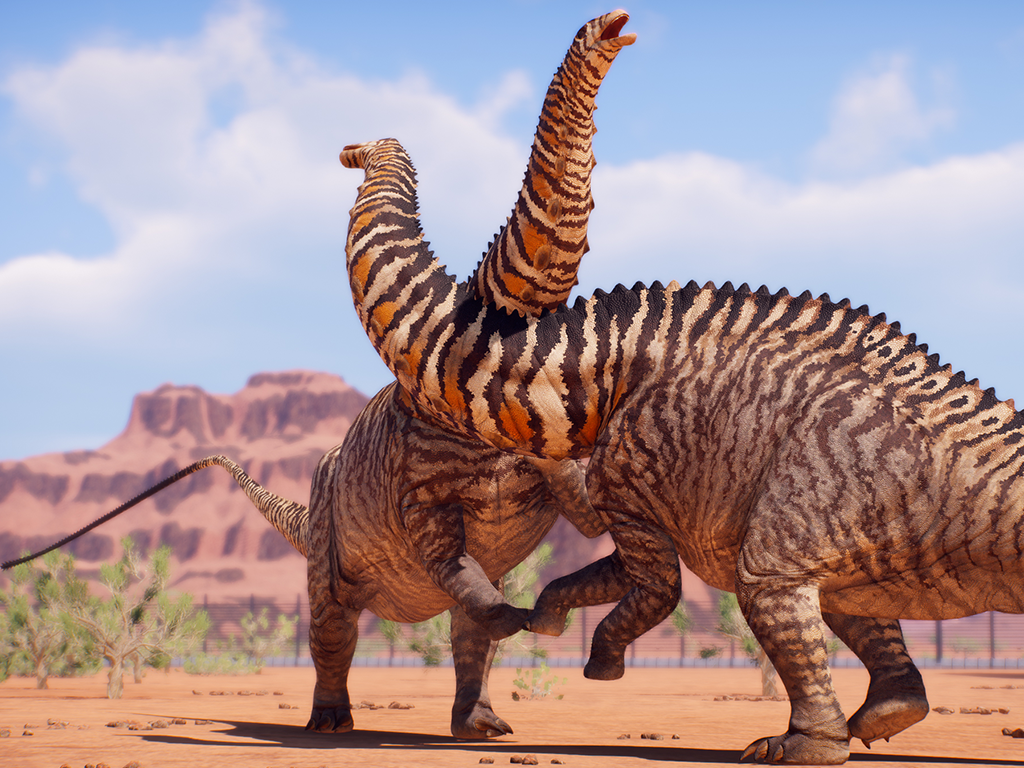
In Update 18, animals will be able to dynamically generate their own dust particles whenever they walk, run, swim, roll over or get bodied by an Apatosaurus. Whatever it is, it can create a particle interaction.
Using a similar technique to our water ripples from last month, this new system will create and manage particles that scale with the impact velocity and size of the animal. Depending on the substrate, this can create some rather dynamic scenes. Sand and snow create the largest plumes, while dirts are more muted. This effect has been built to be highly efficient and is only ever active for animals near the camera.
Hijacking our shadowed glass technique, our new particles can be fully shaded and even support light scattering, giving them a volumetric look. If you couldn’t tell, we adore how it shows at sunset!
This technique applies to water interactions, too, allowing animals to thrash around or create small splashes as they dip their jaw to drink. It really does make them feel so much more grounded!
Animal Shading
In case you didn’t know, animals are made of flesh - and fur - and other bits that typically allow light to scatter through them like teeth and claws. This is now represented in PK through translucency, letting the sun penetrate thin geometry or lighter areas of an animal’s skin.
While it can be a subtle effect, we think it really helps smooth out the overall appearance of an animal. It’s also just cool to see things like fur finally have that rim glow at sunset.
Next, we’ve added support for what’s called anisotropic sheen. It’s basically that cool highlight you see on mammals with short pelts, giving them an almost velvet-like appearance. We’ve since applied this to a few of our animals at varying intensities, but none can compare to what it does for the Smilodon. It’s a big glow up. Especially the melanistic mutations.
Cave Bear Updates
Finally, we decided to give the cave bear a bit of an update. It’s now bulkier with a more bear-like face, thicker neck, adjusted arms and shoulders and improved fur styling. We think it does a better job of capturing the animal and we hope you agree!
Audio Enhancements
While playing PK, you may have noticed that a lot of things don't emit sound! Waterfalls are eerily quiet and buildings don't make a peep. This is because if we had simply slapped a sound emitter on every piece in your park, the audio engine would go extinct!
To fix this problem, a new audio system delivers sound as needed and makes sure it doesn’t break the bank. This has finally allowed us to add things like air conditioner rumbles, kiosk music and dynamic waterfall sounds that change with the number of particles that are nearby. There’s a whole new world to listen to!
Expanding on this, the camera can now detect how enclosed it is as a given moment. This allows us to make interiors sound meaningfully different from the outside world, with new reverb that changes with a room’s size. Animals and modular pieces behind walls also become obstructed, muffling them to the listener.
Map Updates
After working on the Pantanal and putting great care into its natural elements, we decided to go back and give every playable space in the game a facelift. Some of these areas haven’t been updated in years, so we focused on three main things:
Character
Maps should be more than just a different backdrop, they should strive to capture a unique environment or place. Switching between levels needs to feel different.Variety
Where possible, levels should contain a mix of environments or “mini-biomes” and feature locations that are inspiring to build around or explore. Getting things to look natural can be a lot of work for players, so we want to make sure maps are beautiful out of the box.Clarity
If an area looks flat, it should be flat! Elevation changes aren’t a sin, but they must be reasonably obvious and at least never in front of the default park entrance.
The result of this philosophy are levels that (in our opinion) feel bigger while not being overwhelming. Of course creative players can freely bulldoze right through the environment, but if you just want to get straight into the game, we think these maps have a much more guided and inspiring flow to them.
Please note that while your distant terrain will update to the new versions, the main landscape of your existing saves will be unaffected, so you’ll need to make a new park if you want to try the updated maps. We also wanted to mention that how we use foliage has become a lot smarter, so although some of these reworks may look like they have a lot of trees, they’re all less than the current Boreal map.
Desert
Up first is the Jordan desert. This landscape is now a transitional region with dunes, exposed rocks and a light covering of arid foliage. Throughout the map, players will find channels of a slowly drying river bed, filled with pockets of water and vegetation.
To make your experience building on these levels better, we’ll be upgrading the path and nature removal tool to optionally destroy any rocks or clutter in your way. They also now move with terraforming changes, so you won’t get floating rocks if they were sunk into the terrain.
Grassland
The Tanzanian crater now features a mix of environments, ranging from savannas to dry forests and watering holes. On the far side of the map you can find a river running towards the south, supporting a huge stretch of marsh with palm trees and wetter foliage.
Scrubland
Everyone’s favorite Spanish coastline has had its Mediterranean influence dialed up to eleven! This updated version of Costa del Sol tries to capture a much drier and mountainous climate with our recently added Scrubland plants. There’s still plenty of flat terrain to work with but it’s certainly nice to have some more height within the playable area.
Tropical
Our Costa Rican landscape has been completely transformed into a lush and varied rainforest combined with sweeping plains, tight waterways and hardened lava-fields at the foot of the volcano.
We purposely added a lot of interesting locations that you might want to try starting your park from, especially those mountainous channels in the video above.
Temperate
Set in the classic British countryside, Goldfinch Fields finally looks like its intended vision! The new playable area includes a predominantly flat space mixed with gentle hills and occasional ponds. Forests scatter the landscape while paddocks and hedgerow can be seen off in the distance.
It’s been a long four years in its sad original state (some would call it fitting), but we love what it turned into!
Coastal
The Redwood Valley has been refocused to better capture the feeling of a coastal environment. Between the dense sequoias and titular redwoods, you’ll find growths of pine trees and scattered fields. Rocks, stumps and logs litter both the forests and beach to provide an extra sense of authenticity.
While similar in essence to the original version, its landscape feels much more varied!
Boreal
Amidst its snow-capped peaks, the Canadian Rockies have bloomed into a stunning alpine environment with evergreens and huge stretches of open field. Quite a large part of the playable area is flat, but it does retain its original gentle slopes and hills the further you get from the starting area.
Like the current map, this version also has a large river that eventually flows into a lake broken up by small islands along the way.
The greener vibe is quite different from what’s in the game right now, but we wanted to leave the door open for a more fitting, flatter tundra level with dry grasses and plants in the future.
Happy Halloween!
To close out this Dev Diary, one of our concept artists, Ida, is back with another spooky doodle! This time it’s the feathered Baryonyx giving us its very best killer clown costume. Now it’s a Scaryonyx!
And that’s all for this month! As a reminder we won’t be revealing any new species until the trailer in December, so please be patient with us for just a little while longer. There’s a lot of exciting stuff on the way and we’ll see you soon for November’s Dev Diary!
…?
… must’ve been the wind.
- The PK Team

Created by Wither
Created by feathershvdes_
Created by Matheus005