Dev Diary: September 2026


Welcome to the September Development Diary!
It’s been an extremely busy month here at Blue Meridian with some major developments that we think you’ll want to know all about. This diary is going to have quite a lot to cover, so let’s drive right in (beep-beep).

First up, let’s talk about some tech improvements. The engine that we use to build PK has been upgraded, allowing us to improve key technical aspects like the nav mesh system. This is what allows animals, guests and staff to move around your park.
Beyond dramatically increasing its generation speed, one of the biggest changes is that the nav mesh itself can now detect shorelines! This means that water deeper than knee-height can be considered distinct terrain by animals when moving around the environment. Something similar already exists in the current game, but this new method is far more reliable.
As a result, animals should make better attempts to avoid, tolerate or seek water depending on the species preference.
With significantly faster nav mesh generation, we’ve also begun working on breakouts. We’re not going to talk too much about this right now as we’d like to save it for a proper deep-dive, but a lot of the foundational work for animals damaging their environment is now in place. It’s all going to link heavily into engineers and security gameplay, so stay tuned!
In terms of modular building, we made quite a few enhancements this month. For example, edited pieces now show a soft-fill when they intersect with the terrain or go behind other objects. It’s quite helpful when building around walls or dense scenery.
Next, we completely overhauled modules by moving away from the widget system used in the current game. Rather than displaying a massive list of unorganised menus, selecting a group now shows a collection of every module inside. Choosing one from the group or selecting it directly in the park will inspect that module, revealing its menu and any tabs related to it.
There were a lot of reasons why we felt this change was necessary, but the biggest was that as development continued, we simply needed to show more and more information. Many systems ended up being under-explained to fit into the widget design language and they just simply didn’t scale with huge modular groups or controller support.
With this change, we can also allow players to rename modules and even turn them off to help save on upkeep. You can see an example of this below.
On the topic of groups, we’ve got great news for your park's tiniest habitats: you can soon place vivariums in the same group! This’ll make it way easier to build reptile houses or share prefabs.
Vivariums are also getting extra depth with requirements for cleanliness, biomes, nature and more depending on the species in Challenge Mode. We’ll probably touch on Vivariums again later in the dev cycle, so keep an eye out for that!
Update 18
Staff Vehicles
We are incredibly proud to finally announce that staff vehicles are coming to Prehistoric Kingdom! These cars will soon become the backbone of your zoo, efficiently taking workers to their destination and any stops along the way. This is a feature that we’ve wanted for a very long time and we’re sure that your keepers feel the same. After all, no one wants to push a wheelbarrow all the way to the sauropod paddock!
While they are fully functional and integrated into the gameplay, we’d still like to remind you that this is all under heavy development so we’ll be sharing a mix of limited in-game footage and concept art to talk about how they work.
Vehicles & Garages
To start your transport journey, players will need to research the Small Vehicle Garage. This facility allows you to purchase up to 6 Staff Carts per garage and can be used by all staff types.
Beyond simply being faster than walking, carts can carry a lot more resources! In a matter of minutes, your laborers or keepers can restock empty modules without breaking a sweat.
As your park expands, carts can only take you so far. With aggressive animals and big enclosures, you’ll eventually want to research the Large Vehicle Garage! With these, you can purchase up to 4 SUVs and provide staff with a faster, sturdier solution with enough capacity to restock many feeders.
When available, these cars are used exclusively by keepers, vets, security and even engineers while entering an enclosure.
Keep in mind that buying vehicles isn’t a particularly cheap practice and that’s before considering their monthly upkeep cost. If they’re damaged by animals or start to wear down with age, they’ll need to be maintained by an engineer. You’ll need quite a bit of cash before you can reliably afford a large fleet!
Drivers & Dispatch
To maximise the efficiency of your workforce, vehicles aren’t actually driven by staff! Instead, they will request a pick up from the nearest available car and send a driver to meet them in the field. This ensures that staff can focus on doing their job without having to drive back to the garage themselves.
Drivers are a purely cosmetic staff type and do not need to be managed or hired by the player. Their fee is included in the monthly upkeep of a vehicle and they are called from a garage when needed.
Although we’re currently using temporary animations and models for the drivers, you can see how the process works below.
Cars will be dispatched based on the staff type and requested job. Cashiers are the least important while keepers, vets and security take priority.
Depending on who is being transported, the toolbox in the back of a car changes its color to match their role (e.g. green for keeper). Likewise, any resource being carried by the car will show up, too. It makes it very easy to figure out what a car might be doing at a glance.
Transporting Staff
With our nav mesh improvements, we’ve made it so that cars will generally try to avoid guest areas where possible, meaning that making backstage roads, bridges or tunnels is actually a viable strategy. The inverse is also now true for staff members, where they’ll prefer to walk along paths and other structures rather than always run straight through the woods to their destination.
To actually drive around the park, carts and SUVs use the medium animal nav mesh, letting them access player-built walkways, ramps or go into buildings with enough clearance. Cars drive fastest on paths and modular pieces, while different terrain textures will slow them down and add little bumps and jostles.
Cars will try to get as close as possible to their destination, but if an area becomes too small or is behind a staff gate, the vehicle will wait nearby while staff jump out and continue on foot. While watching the footage below, try to imagine how much longer it’d take a keeper to walk to this enclosure.
Note: Humans do not yet avoid vehicles, so there’s some clipping that will be addressed.
Now, if your goal is to get cars into an enclosure and make things extra efficient, you should build a Vehicle Gate! These will come in a variety of styles just like the current staff gates. We suggest you hire some engineers to maintain them, though, or else your exhibit might end up missing some animals!
Once staff no longer need a vehicle, they’ll be escorted out of an enclosure (if they’re in one) and the driver will return to the garage by themself. However, they can change course and go to pick up another staff member if they request it.
Customization
By clicking on a car, players can freely edit its color and style! You can also apply these changes across the entire park or for a specific fleet by editing them at a garage. There will be around 6 pattern styles when the update releases.
As a bonus detail, there are over 20 different license plates that can show up on the vehicles. They’re all paleo references so we’ll leave you to discover them all!
Prehistoric Parking
It can’t be understated just how much more fun and interactive the game feels with vehicles. It makes the park feel way more alive and it gives staff an immediacy they didn’t have before, it actually feels like they’re making a tangible impact that’s easy to follow when watching your park from above.
We’re extremely proud of the progress thus far and are excited to keep polishing vehicles with more assets, driving animations, particles and something else that you’ll have to wait and see. We’ll keep you updated on the improvements as development continues and show more extended gameplay in the future!
New Species
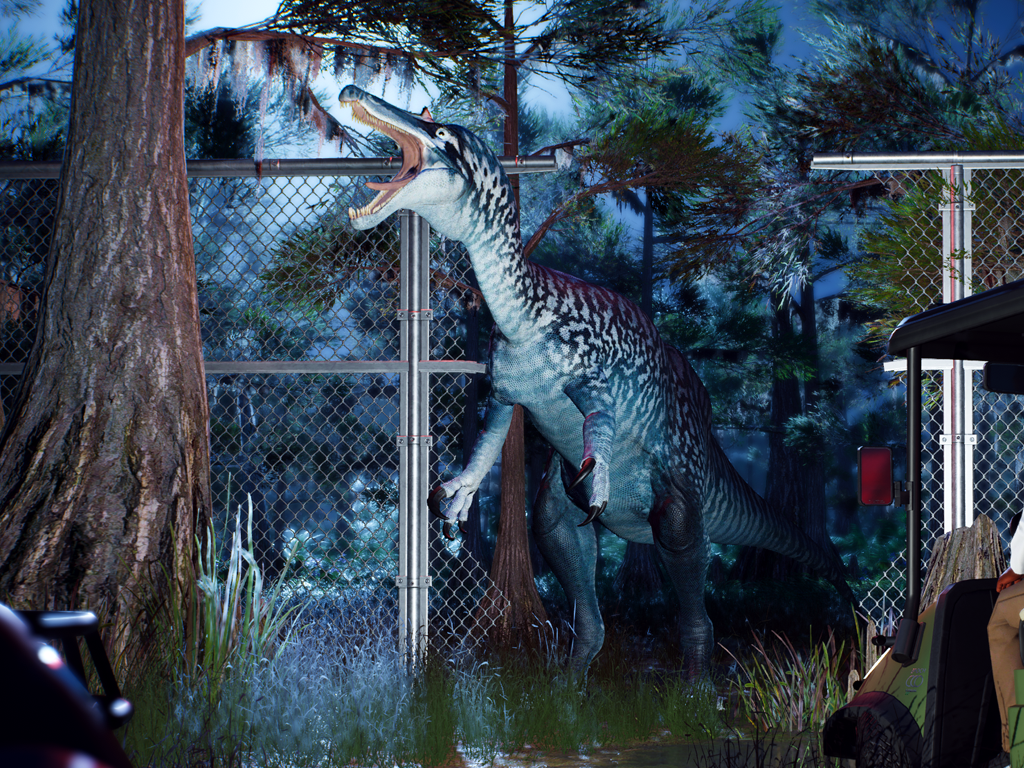
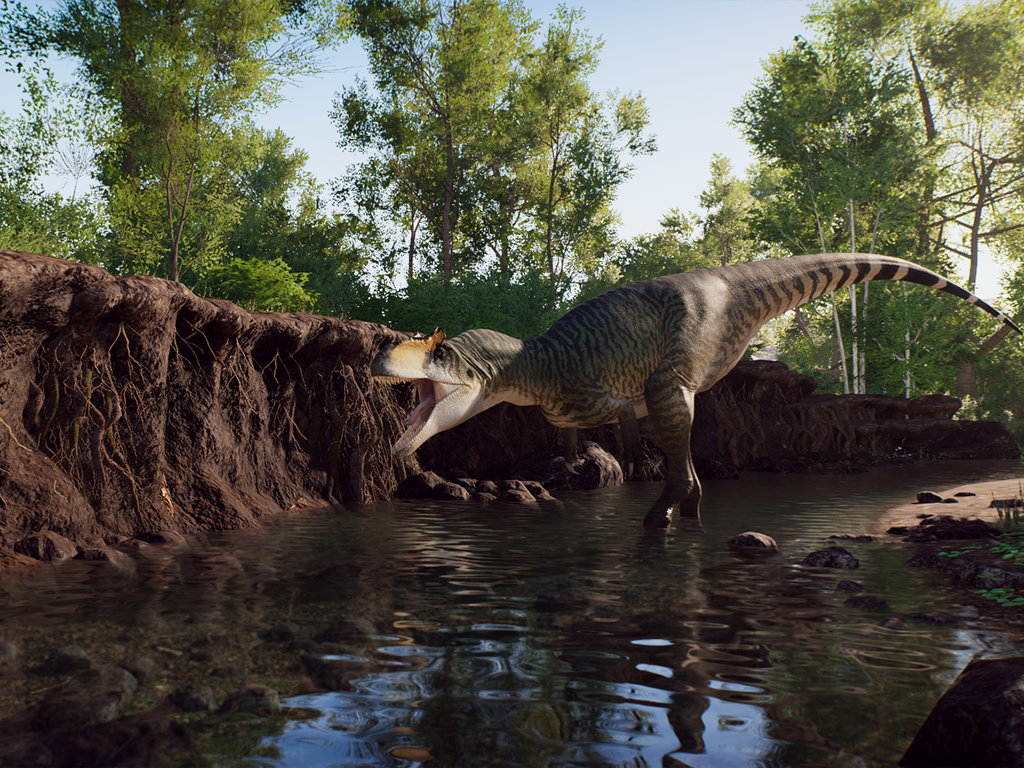
The heavy-clawed Baryonyx is wading its way to a park near you in Update 18! This Cretaceous predator once roamed the waterways of prehistoric England, looking for its next meal (and nap in the sun).
Over the next three months, we’ll be revealing each skin in-game with today’s showcase focused on the “classic” option. Amongst its slick red and blue scales lies an intricate pattern that resembles the type of caustics you’d see underwater! Each skin also has slightly different facial ornamentation, so be sure to compare them when future diaries get released.
Management View
Continuing our crusade to improve the Management View, we’re bringing big changes to the staff overlay! In the current game, this menu simply shows where staff are moving and how many of them are on duty vs. on break.
In U18, however, you can also see a list of the current job sites. These are sorted into pending or active tasks, making it easier to find potential issues and figure out exactly why staff may be blocked from doing what you expect. You can filter this list by workzone and even see how many staff are idling as a result of pending tasks.
Similarly, the resources overlay has been improved, too. There are now two separate columns to indicate how many resources are stored within warehouses vs. on-site consumers like feeders and kiosks.
In the current game this information was previously combined into a single bar, so it should be a lot easier to tell when you’re actually running low on food or supplies.
A park issue will also generate when you’re starting to run low on a particular resource!
Water & Grass Interaction
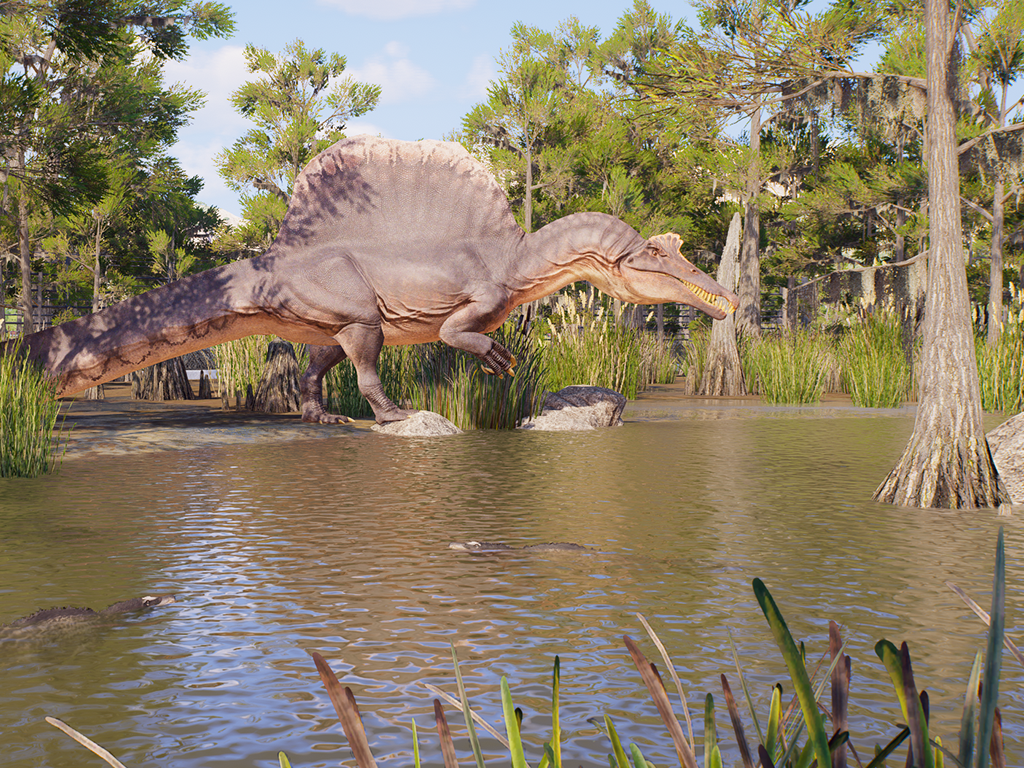
With the theme of this update being wetlands, we thought it’d be fitting to finally start working on water interaction. Using our custom, ultra-fast™ bone system, we’re able to create ripples and waves where parts of an animal’s body intersects with water. These effects change depending on how fast the bone was moving, so it can lead to quite a dynamic scene.
We’re still working on the visuals and plan to add particle effects, but it already adds so much to the world.
The same principle has been applied to grass, letting it fold beneath animals and staff as they move through the environment. This is a little harder to demonstrate as video recordings usually hate grass in games, but hopefully it comes across!
New Scenery
For all the builders out there, we’ve got a whole heap of industrial props coming your way. We noticed how often the community would build items like these by hand, so we wanted to offer a quick way to place various towers, antennas, roller doors and other pieces that give buildings an authentic feeling. As usual, these are all recolorable!
New Plant
To close out September’s Dev Diary, our final plant coming in U18 is duckweed! We simply couldn’t do a wetland update without adding one of the world’s most iconic swamp plants, so we hope you and our new watery friends look forward to it.

Created by fly away
Created by VirosArts
Created by Claude
Thank you for reading September’s dev diary!
There was a lot to get through today but it is far from over. We thought U17 was our biggest update ever but that title might not last when U18 drops later this year. Be sure to check out our Patreon for weekly updates and we’ll see you next month in October.
- The PK Team